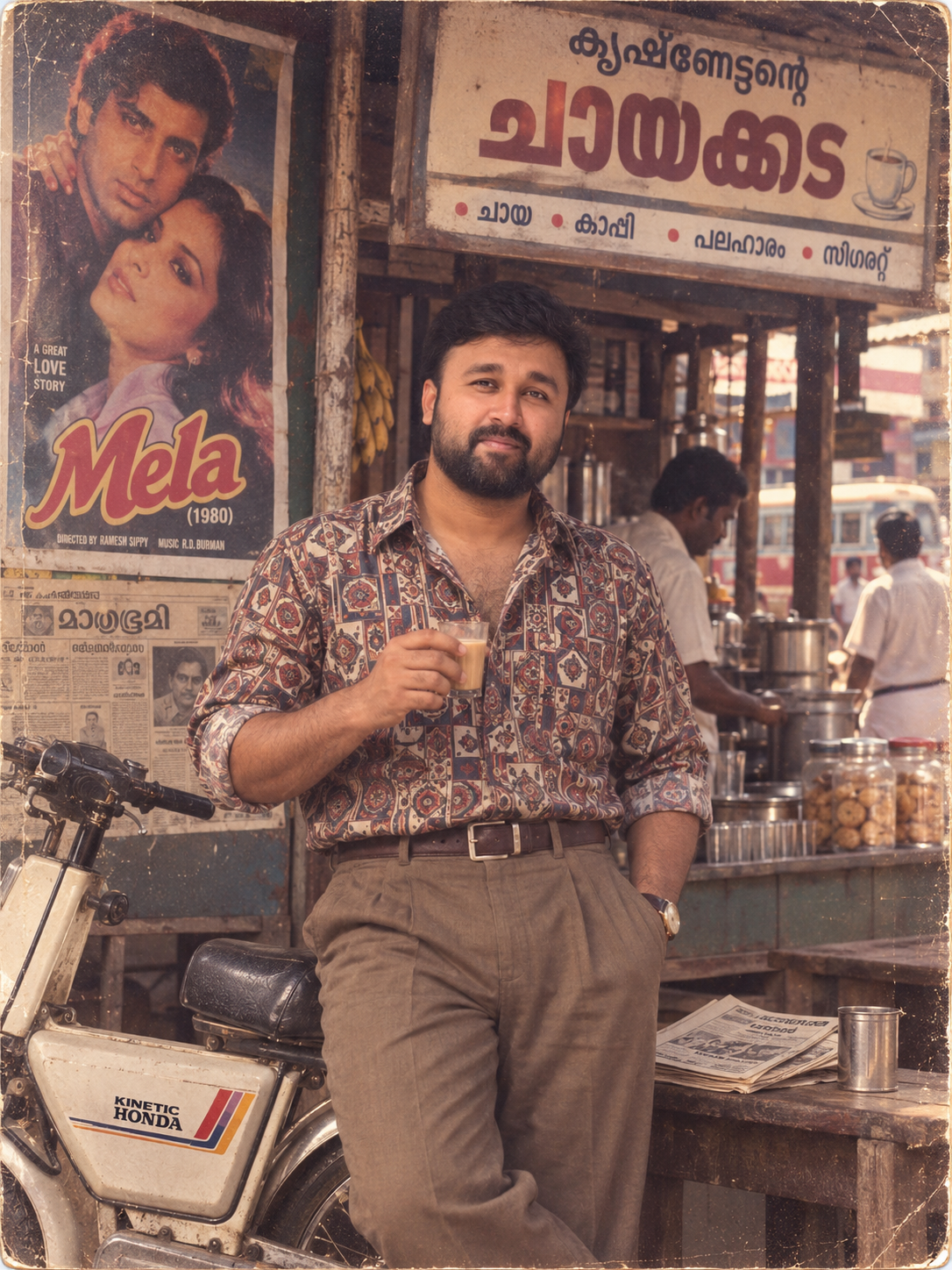
Have you ever wondered what you would’ve looked like in the 80s?
The 1980s had a completely different visual identity. From Bollywood heroes with neatly combed hair and high-waisted trousers to glamorous Hollywood portraits, oversized silhouettes, statement jewellery, analogue film grain and warm studio lighting, photographs from the decade had a character that modern smartphone cameras rarely reproduce.
Today, AI image generation makes it possible to take an ordinary photograph and reimagine it as though it had actually been captured decades ago.
Instead of simply applying a vintage filter, you can use detailed AI prompts to change the clothing, hairstyle, lighting, background, photography style and overall atmosphere while keeping your face recognizable.
I experimented with several different retro concepts, including 1980s Bollywood portraits, Hollywood glamour, Indian family photographs, film-reel stills, magazine covers and early-1990s snapshots. The results can look surprisingly realistic when the prompt focuses on photographic details rather than simply asking for an “old photo.”
In this guide, I’ll show you exactly how to create the “What I would’ve looked like in the 80s” effect and provide the prompts used for different styles.
What Does “What I Would’ve Looked Like in the 80s” Mean?
The idea is simple: take a modern photograph and imagine the same person living in the 1980s.
The goal isn’t necessarily to make the person look older or younger. Instead, the AI changes the visual environment around the person.
For example, a modern portrait can become:
- A glamorous 1980s Hollywood studio portrait
- An Indian Bollywood hero photograph
- An old family-album photograph
- A classic film-reel still
- An Indian film magazine cover
- A retro tea-shop photograph
- A vintage studio portrait
- A late-1980s Indian street photograph
The most important part is preserving the person’s recognizable appearance.
A good prompt should specifically tell the AI not to unnecessarily change the person’s face shape, facial structure, skin tone or natural features.
How to Create an Authentic 1980s Photo With AI
The biggest mistake people make is asking an AI image generator to simply “make this photo look old.”
That usually produces a modern photograph with a sepia filter.
A convincing result needs much more detail.
Think about five major elements:
1. Face and identity
Tell the AI to preserve the person’s facial identity, face shape, natural complexion and recognizable features.
2. Fashion
Describe clothing that belongs to the period, such as tailored shirts, high-waisted trousers, dramatic shoulders, bold colours and statement jewellery.
3. Hair and styling
The hairstyle is one of the easiest ways to establish a decade. Voluminous, carefully styled hair can immediately create an 80s appearance.
4. Photography
Specify analogue film, soft focus, flash photography, film grain and realistic colour characteristics.
5. Environment
A studio, Bollywood set, family living room, tea shop or Hollywood-style interior can make the transformation much more convincing.
1. Glamorous 1980s Hollywood Portrait
For a luxurious Hollywood-inspired transformation, this prompt creates a classic cinematic look:
Transform this photo into a glamorous authentic 1980s Hollywood portrait. Preserve the exact facial identity, facial features, face shape, skin tone, natural complexion and recognisable appearance without changing or beautifying the face. Style like a glamorous Hollywood actress from the golden era of 1980s cinema, wearing an elegant statement outfit with bold shoulders, luxurious fabric and sophisticated jewellery. Give voluminous, perfectly styled 1980s hair, refined makeup with defined eyes and glossy lips. Set the portrait in a classic Hollywood studio or upscale Beverly Hills-style interior, with cinematic soft-focus lighting, subtle flash photography and a warm analogue film glow.
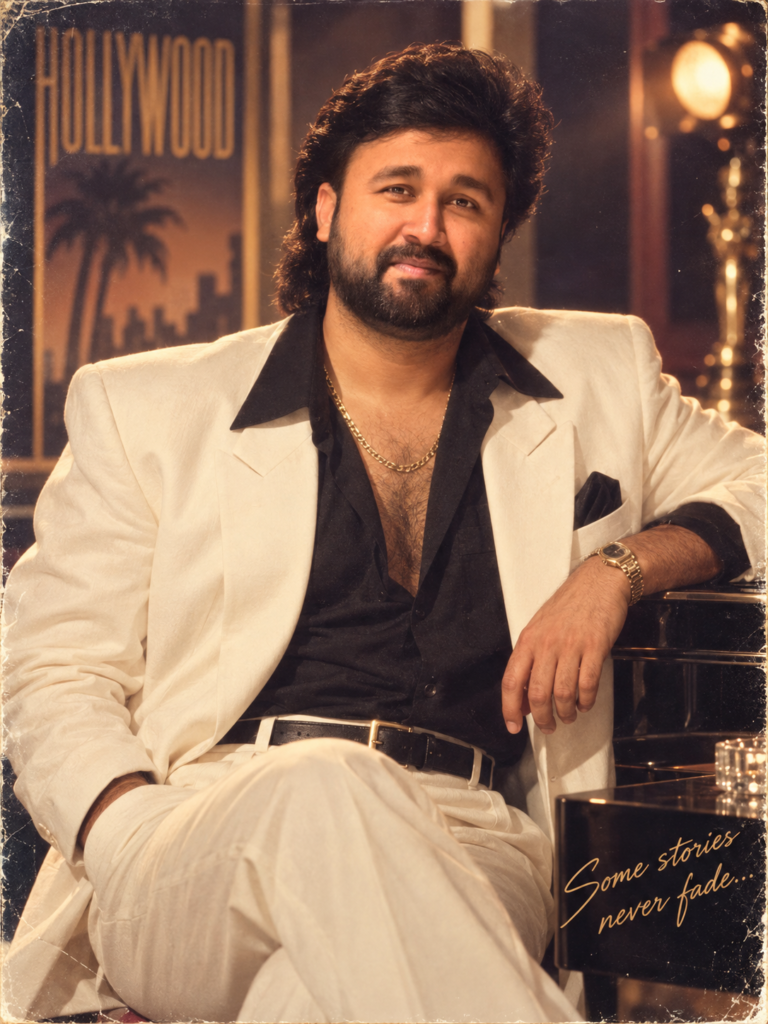
This works because it doesn’t rely only on colour grading.
The prompt establishes fashion, hairstyle, lighting, location and photographic characteristics.
If you’re creating the image from a male photograph, you can also modify the wording around the clothing and makeup while keeping the same cinematic Hollywood concept.
2. Authentic 1980s Glamour Portrait
If you want something less specifically Hollywood and more generally glamorous, try this version:
Transform this photo into an authentic glamorous 1980s portrait. Preserve my exact facial identity, facial structure, expressions, skin tone and natural features without alteration. Style in a bold 1980s-inspired outfit with dramatic silhouettes, rich colours, statement earrings and voluminous era-appropriate hair. Create a classic studio or cinematic backdrop with subtle retro details. Use dramatic soft-focus lighting, slight flash photography, analogue film grain and authentic 1980s colour tones.
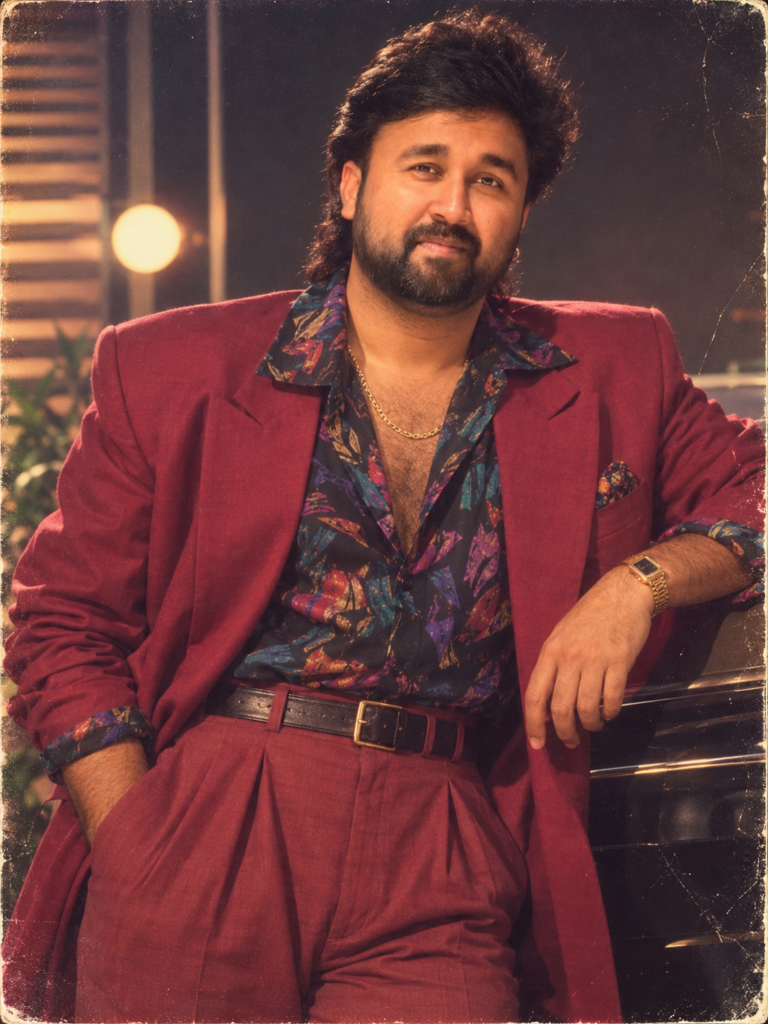
This is particularly useful when you want the photograph to feel like a professional studio portrait from the decade rather than a movie poster.
3. 1980s Hollywood Studio Style
For an even more glamorous cinematic treatment, use:
Transform this photo into a glamorous authentic 1980s Hollywood portrait. Preserve the exact facial identity, facial features, face shape, skin tone, natural complexion and recognisable appearance without changing or beautifying the face. Style like a glamorous Hollywood actress from the golden era of 1980s cinema, wearing an elegant statement outfit with bold shoulders, luxurious fabric and sophisticated jewellery. Give voluminous, perfectly styled 1980s hair, refined makeup with defined eyes and glossy lips. Set the portrait in a classic Hollywood studio or upscale Beverly Hills-style interior, with cinematic soft-focus lighting, subtle flash photography and a warm analogue film glow.
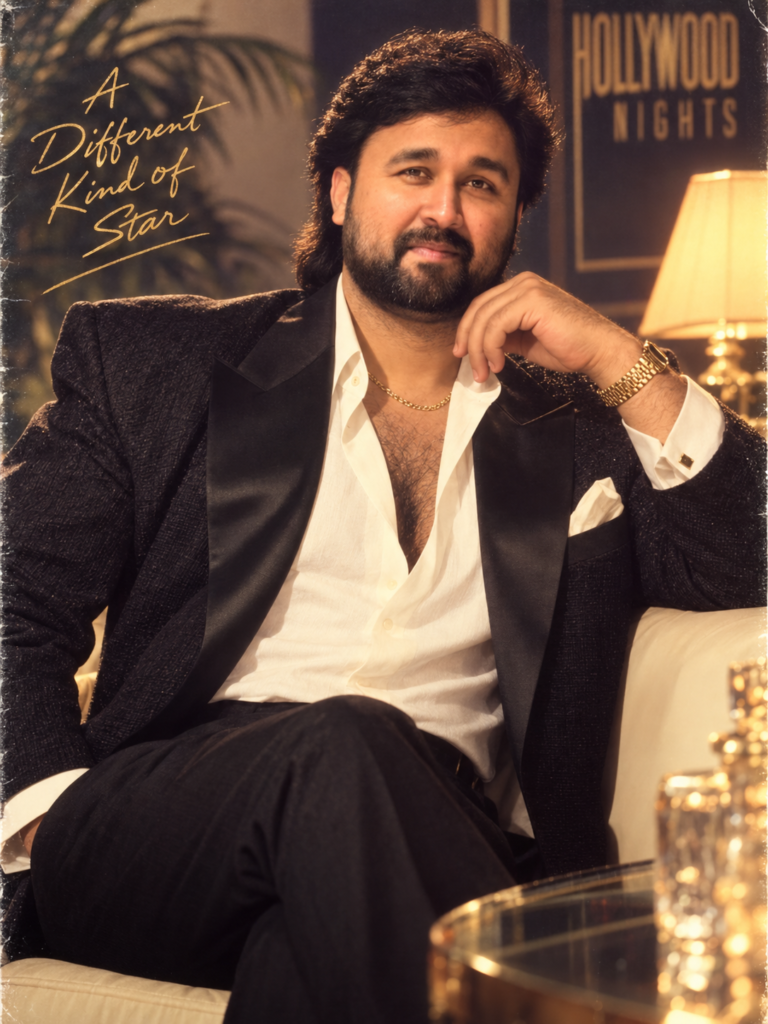
The emphasis here is on glamour photography, rather than simply making the image look old.
4. Cinematic 1980s Film-Reel Still
If you want your photograph to look like a frame taken directly from an old movie, this prompt is ideal:
Turn this photo into a cinematic 1980s film-reel still. Preserve my face and natural skin tone. Add warm amber lighting, a soft vignette, subtle film scratches and grain, and a nostalgic, slightly dramatic expression to match an old movie frame.
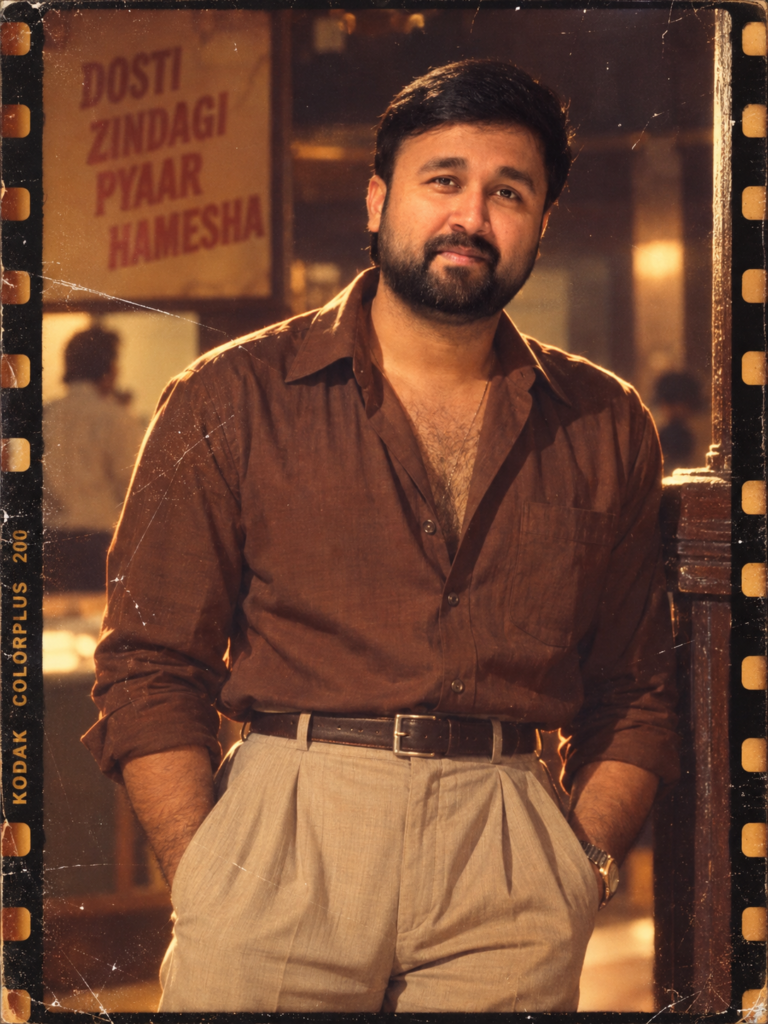
This style works especially well for dramatic portraits.
The combination of amber lighting, soft vignette, scratches and analogue grain creates the feeling of a frame taken from an actual film reel.
5. 1980s Indian Film Magazine Cover
Want to imagine yourself as a movie star featured on an old Indian magazine?
Try:
Turn this photo into the cover of an old Indian film magazine from the 1980s. Keep my face unchanged. Add bold cover-style typography space, a glossy studio portrait finish, warm saturated colours and a slightly worn, printed paper texture.
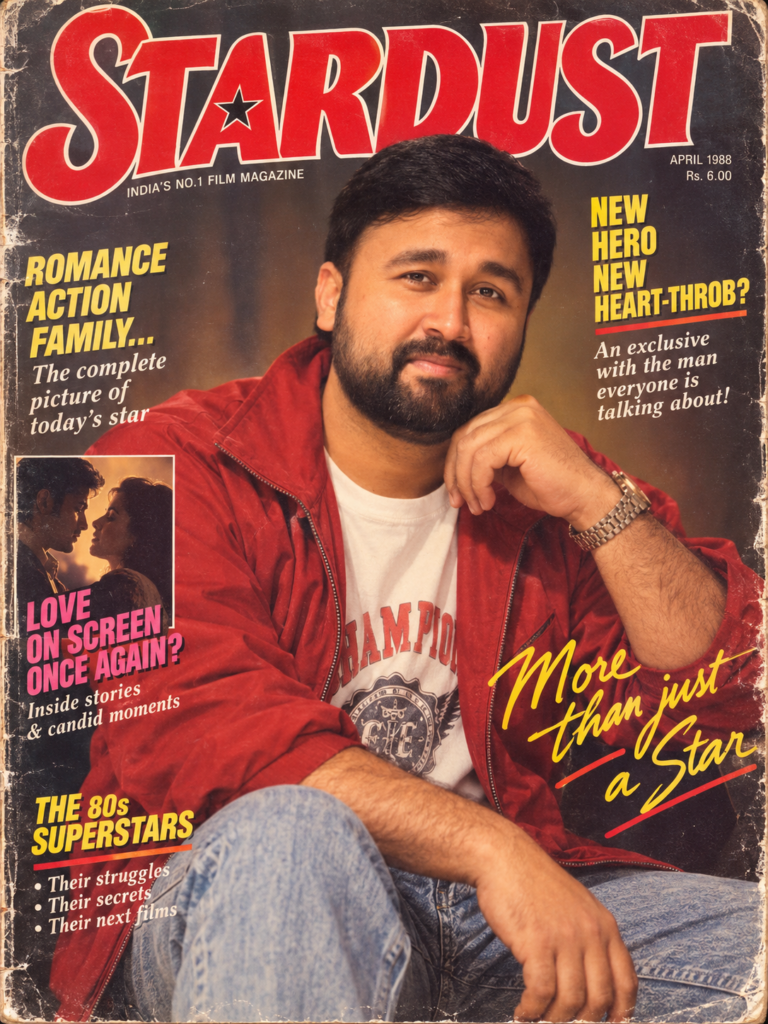
This prompt changes the presentation rather than simply changing the photograph.
The printed-paper texture and typography space help make the result resemble an old physical magazine rather than a digitally edited image.
6. 1980s Bollywood Hero Look
For a classic Indian cinema-inspired transformation:
Turn this photo into a stylish 1980s Bollywood hero look. Preserve my face and skin tone exactly. Add a loose tailored shirt, high-waisted trousers, neatly combed hair, a thick moustache and warm, slightly faded studio lighting.

This is one of the simplest prompts in the collection, but it establishes several important visual characteristics of 1980s Bollywood fashion.
The combination of loose shirt + high-waisted trousers + moustache + neatly styled hair immediately pushes the image toward a classic Bollywood aesthetic.
7. 1990s Video Rental Store Snapshot
Not every retro transformation has to be from the 1980s. Early 1990s photography has its own nostalgic look.
Transform [YOUR PHOTO] into a 1990s snapshot inside a video rental store, with shelves of VHS tapes and bright fluorescent lighting behind me. Keep my exact face, likeness, and identity unchanged: do not alter my features, age, or skin tone. Add on-camera flash, a slight green fluorescent color cast, and fine film grain. Dress me in a graphic tee and give me a candid mid-laugh expression. Render as a 3:4 portrait.
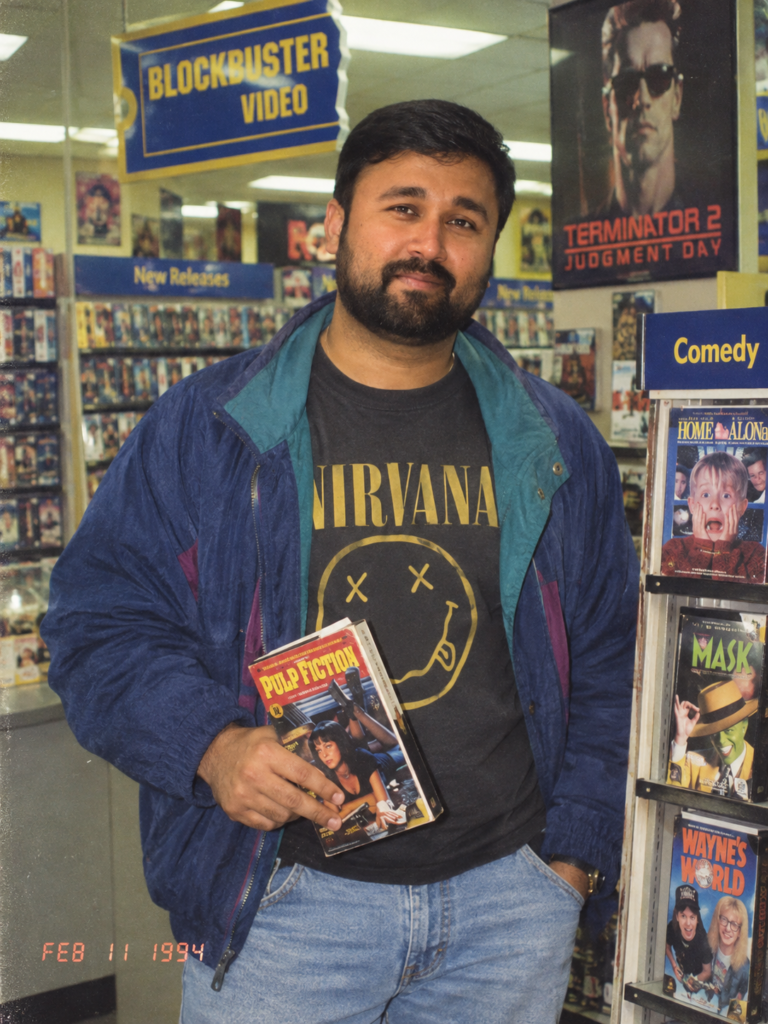
The VHS shelves and fluorescent lighting instantly establish the period.
The greenish colour cast is also important because inexpensive indoor film photography often had very different colour characteristics from today’s smartphone images.
8. Retro 1990s Diner Photograph
For a relaxed American retro snapshot:
Convert [YOUR PHOTO] into a 1990s photo taken in a retro diner booth with red vinyl seats, chrome trim, and a jukebox glowing behind me. Keep my exact face and identity unchanged: do not alter my features, age, or skin tone. Use warm interior light plus a soft flash, dress me in a denim jacket, and add the faded warm tones and light grain of a 90s film print. Give me a relaxed, candid expression. Render as a 4:5 portrait.
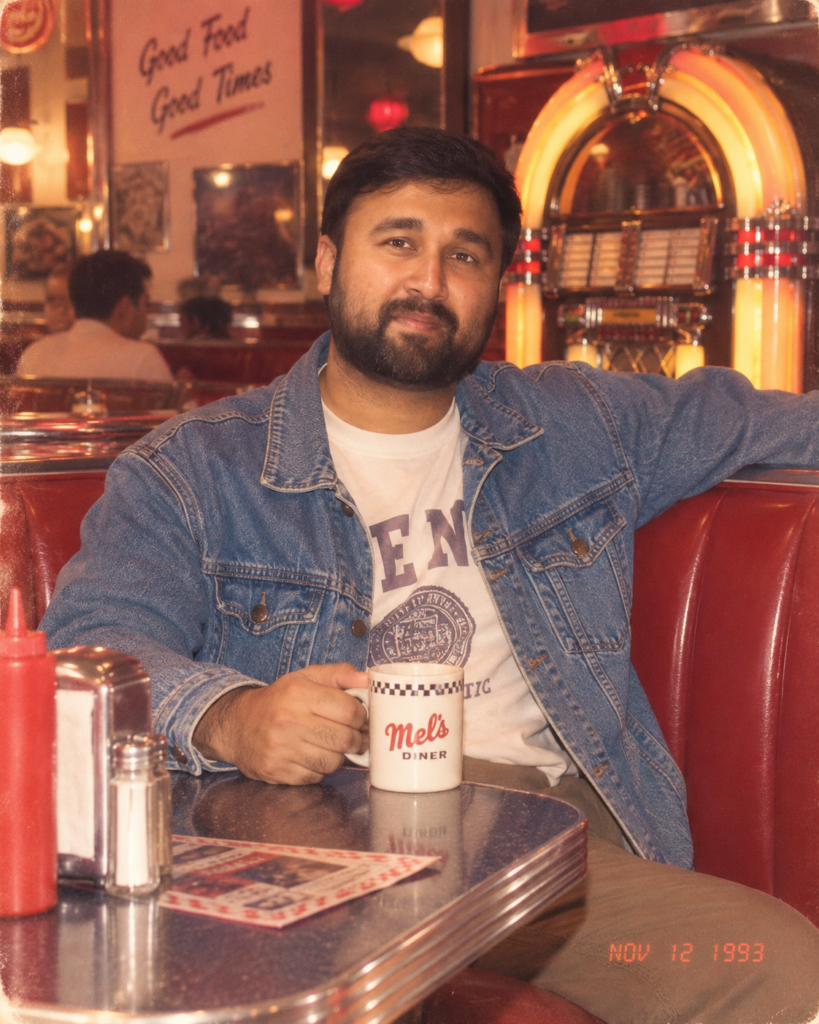
This prompt works because the background elements are highly recognizable.
A jukebox, red vinyl seating, chrome trim and denim jacket immediately communicate the retro diner aesthetic.
9. 1990s Arcade Snapshot
For something more energetic:
Restyle as a 1990s arcade snapshot: I’m standing between glowing cabinets, bathed in red-and-blue neon with dark shadows behind me. Keep my exact face, likeness, and identity unchanged: do not alter my features, age, or skin tone. Add the harsh on-camera flash of a point-and-shoot, faint motion blur in the background, and the grain of ISO 400 film. Dress me in a bomber jacket and give it a fun, energetic mood. Render as a 3:4 portrait.

This is very different from a traditional studio portrait.
Instead of soft lighting, it uses neon, flash and motion blur to recreate the feeling of a cheap point-and-shoot camera.
10. 1990s Family Living Room Snapshot
For a nostalgic home photograph:
Turn [YOUR PHOTO] into a candid 1990s snapshot taken in a suburban living room with floral wallpaper, a boxy TV, and a beige sofa. Keep my exact face and identity unchanged: do not alter my features, age, or skin tone. Light it with warm tungsten lamps and a hint of on-camera flash, dress me in casual weekend clothes, and add the slight color cast and grain of a drugstore film print. Render as a 4:5 portrait.
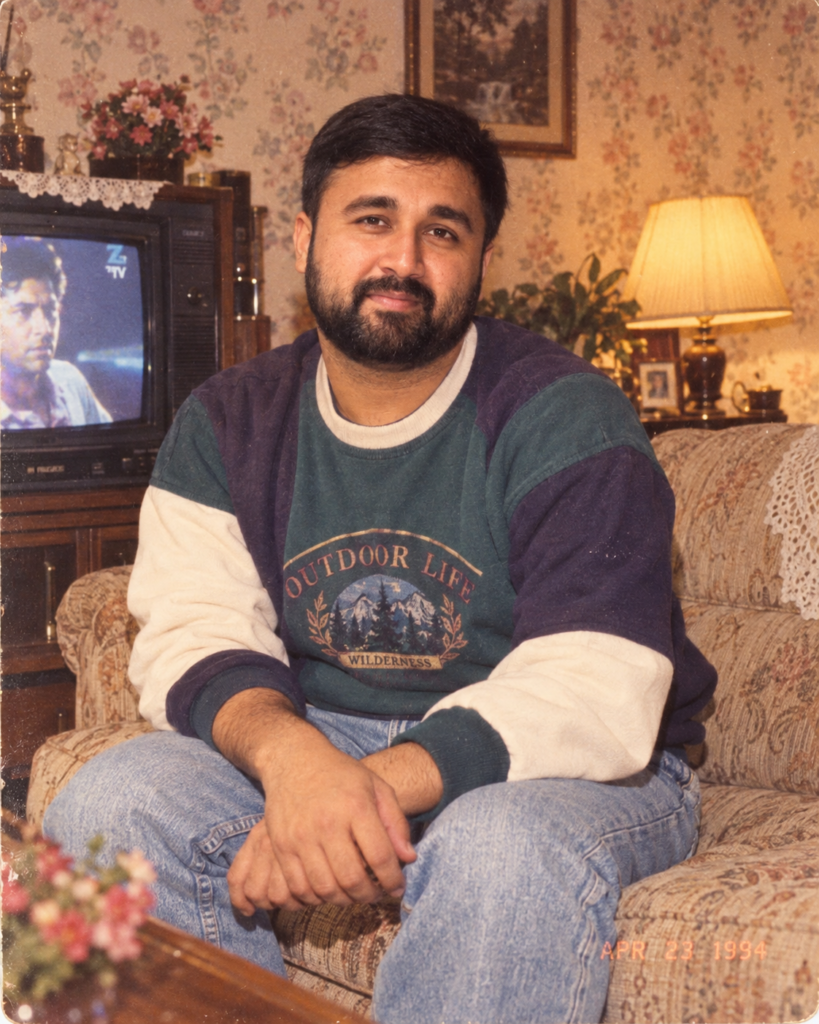
This is particularly effective if you want the result to look ordinary and believable rather than glamorous.
11. Early-1990s Mall Portrait
Another nostalgic option is the classic shopping-mall photo studio:
Transform into a classic early-1990s mall portrait-studio shot with a mottled blue-grey laser backdrop and soft frontal lighting. Keep my exact face, likeness, and identity unchanged: do not alter my features, age, or skin tone. Dress me in a chunky knit sweater, seat me at a slight three-quarter angle with a warm closed-mouth smile, and add faint film grain and slightly soft focus. Render as a 4:5 portrait.
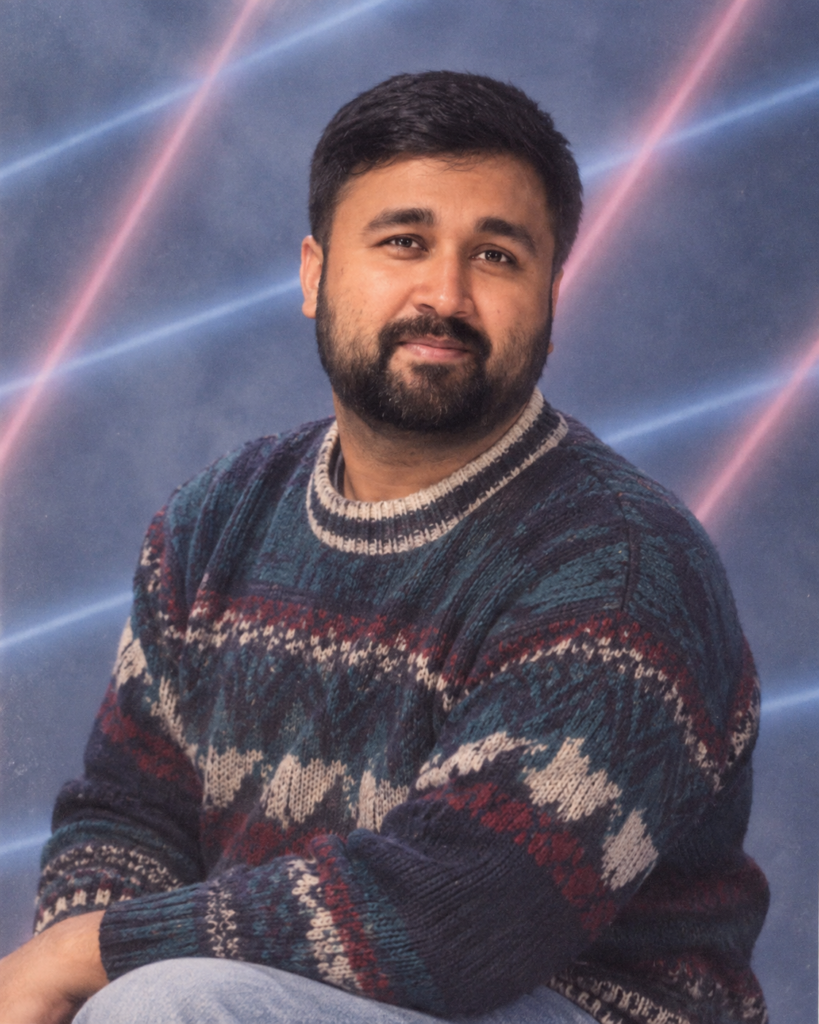
The blue-grey laser backdrop and chunky sweater are especially useful for reproducing the unmistakable mall-studio aesthetic.
12. Kerala Tea-Shop Retro Photograph
For an Indian regional twist, you can go beyond Bollywood and recreate everyday Kerala in the retro era:
Retro 80s hairstyle & glam styling Vintage fashion-forward printed shin High-waisted retro pants A glass of Kerala chaaya
An old Kinetic Honda parked beside the tea shop
An old-school “Mela” (1980) movie poster on the wall
Vintage newspapers, tea-shop details & Malayalam signboards
And that warm, faded old-film photography feel — grain, scratches soft colours and all.
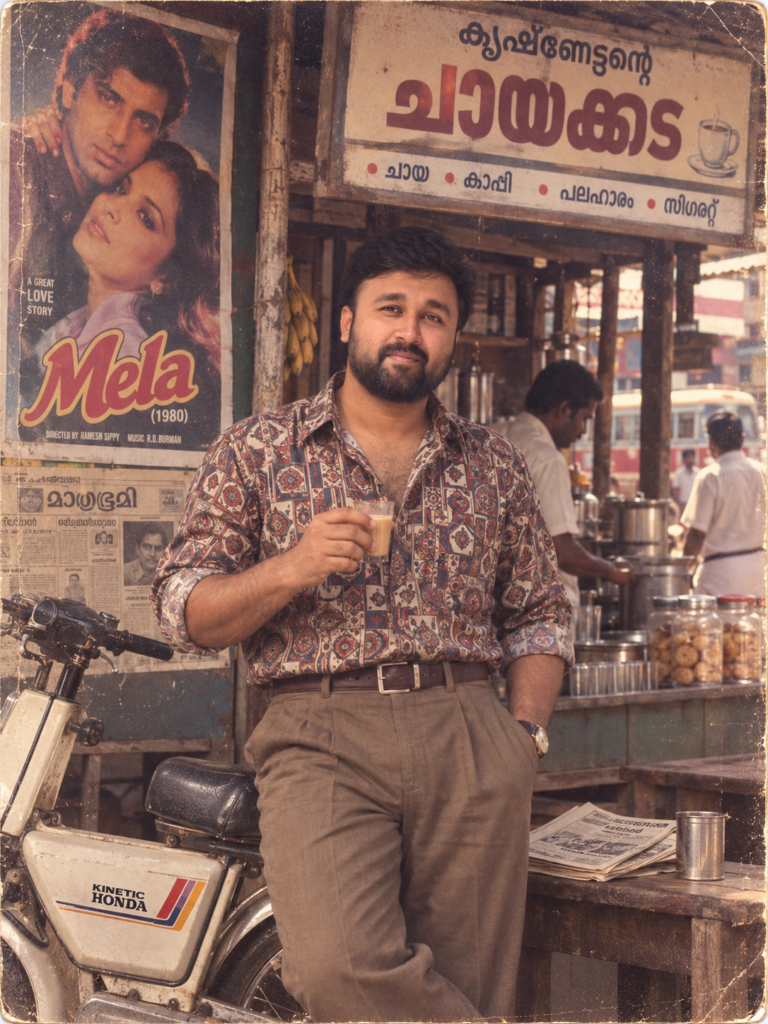
This concept is especially interesting because the setting tells the story.
Instead of creating a generic “vintage India” background, specific details such as Kerala chaaya, Malayalam signboards, an old Kinetic Honda, newspapers and a movie poster make the scene feel much more localized.
13. Mid-1980s Indian Family Album
Sometimes the most convincing vintage photograph is not a glamorous one.
Try recreating an ordinary family memory:
Recreate this photo as if it were taken in an Indian family photo album in the mid-1980s. Keep the person’s face and expression natural. Add period-appropriate clothes, hairstyle and background, with a simple indoor setting, analogue camera texture, slight grain, soft lighting and realistic film colours. Avoid a modern digital look.
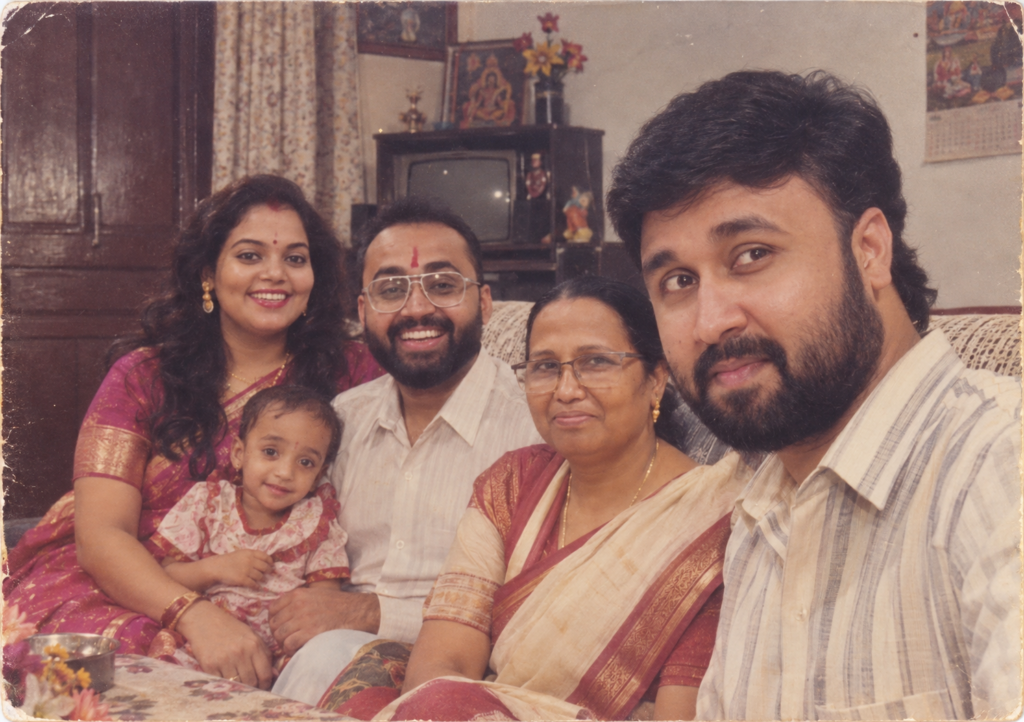
The instruction to avoid a modern digital look is important.
A real family photograph from the 1980s wouldn’t normally have perfect sharpness, modern HDR or smartphone-style skin detail.
14. Bollywood Hero Studio Portrait
For a more traditional studio photograph:
Recreate this photo as a 1980s Bollywood hero studio portrait. Keep my facial identity unchanged. Give me an authentic period hairstyle, moustache if appropriate, tucked or loose shirt, high-waisted trousers and a classic studio backdrop. Use analogue film grain, warm lighting and slightly faded colours. Make it look like a genuine 1980s photograph.
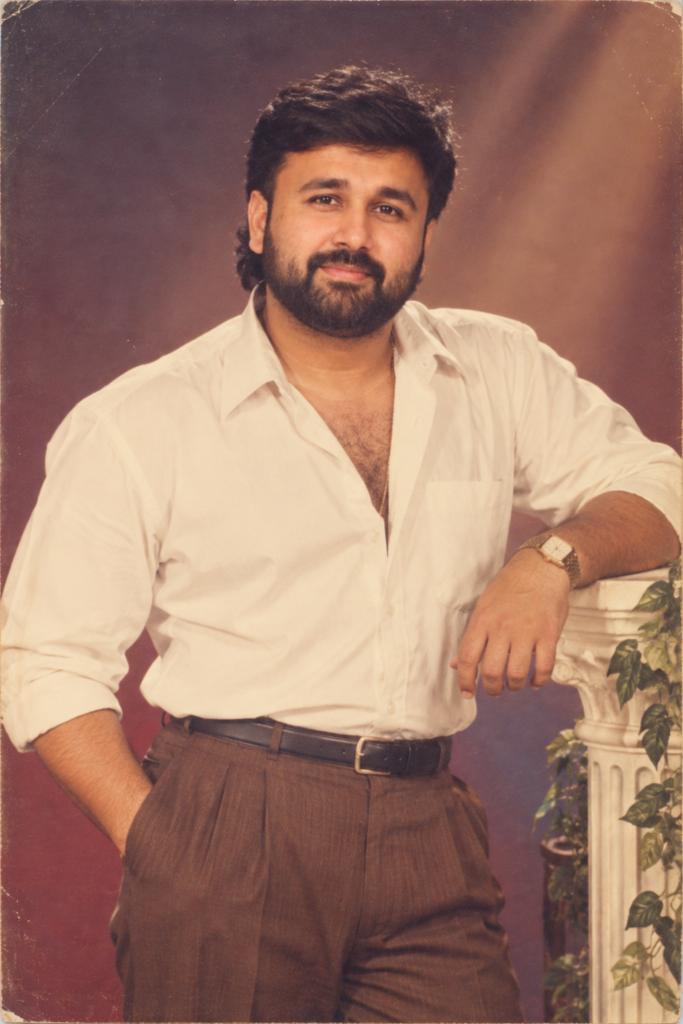
This is a good prompt when you want the final image to resemble a professional actor portfolio photograph.
15. Authentic Indian 1980s Studio Portrait
For maximum realism:
Transform this photo into an authentic 1980s Bollywood studio portrait. Keep my facial features and identity recognisable. Give me period-appropriate 1980s Indian clothing, hairstyle and accessories, with warm studio lighting, soft focus, subtle film grain and slightly faded colours. Make it look like a real photograph taken in India in the 1980s, not a modern photo with a vintage filter. Do not change my facial structure or make me look like a different person. Keep the result photorealistic. Avoid excessive vintage effects, sepia tones or artificial-looking ageing. The photograph should look naturally shot on an analogue camera in the 1980s.
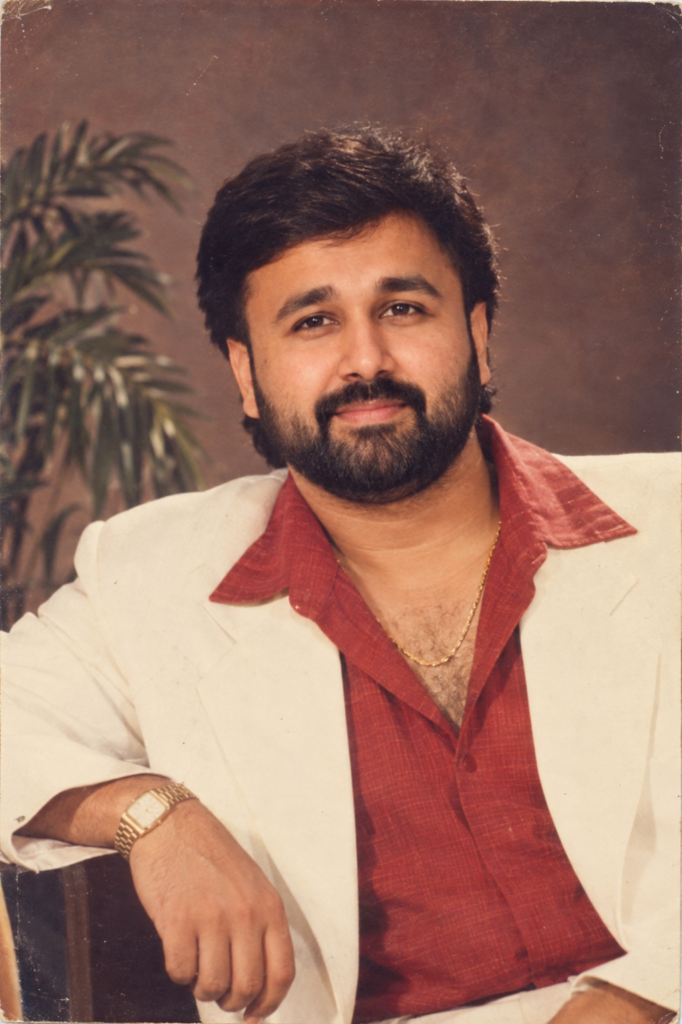
This is probably the most important prompt if your goal is authenticity.
Notice the instruction:
“not a modern photo with a vintage filter.”
That tells the image generator that the entire photographic aesthetic should change—not just the colours.
How to Make Your AI 80s Photo Look Real
If you want the result to look convincing, don’t overdo the vintage effects.
A common mistake is asking for:
- Heavy scratches
- Extreme sepia
- Excessive dust
- Fake cracks
- Extremely faded colours
- Artificial ageing
- Very strong blur
These effects can make the image look like a modern AI picture pretending to be old.
Instead, use subtle analogue characteristics.
Good vintage characteristics include:
- Fine film grain
- Slight softness
- Warm studio lighting
- Mild colour fading
- Natural flash
- Slight vignette
- Realistic skin texture
- Slightly imperfect exposure
- Period-appropriate clothing
- Authentic backgrounds
The objective should be:
“Could this actually have been photographed in 1985?”
rather than:
“Does this have a vintage filter?”
Why Facial Identity Matters
One of the biggest advantages of using a detailed prompt is that you can explicitly instruct the AI to preserve your appearance.
Words such as “preserve my exact facial identity,” “keep my facial structure unchanged,” “do not alter my skin tone” and “keep my natural features” help communicate that the transformation should focus on styling rather than replacing the person.
However, image-generation systems can still introduce changes. If maintaining your exact appearance is important, use a clear, high-quality source photograph with good lighting and a visible face.
80s vs 90s: Which Retro Style Looks Better?
Both decades have very different aesthetics.
| Style | Typical Look |
|---|---|
| Early 1980s | Glamorous studio portraits, dramatic silhouettes, warm film |
| Mid-1980s | Bollywood glamour, bold clothing, statement accessories |
| Late 1980s | Bigger hairstyles, colourful fashion, polished studio photography |
| Early 1990s | VHS, denim, mall studios, casual fashion |
| Mid-1990s | Flash photography, arcades, graphic tees, candid snapshots |
If your goal is “What would I have looked like in the 80s?”, I would start with the Bollywood studio portrait or Indian family-album concept.
If you want something more playful, try the 1990s arcade, diner or VHS-store concepts.
Final Thoughts: What Would You Have Looked Like in the 80s?
The fun part of AI photography is that you don’t have to settle for one version of your imagined past.
You can see yourself as a 1980s Bollywood hero, a glamorous Hollywood-style studio star, someone posing for an Indian film magazine, or simply a person sitting with family in an ordinary mid-1980s living room.
The key is to describe more than just the decade.
Describe the clothes, hair, location, camera, lighting, film stock, colours, props and mood.
And most importantly, tell the AI to preserve your natural identity rather than turning the photograph into a completely different person.
So if you’ve ever searched for “what I would’ve looked like in the 80s”, these prompts give you several ways to find out—from Bollywood glamour and Indian family albums to analogue film stills and early-1990s nostalgia.
The best result isn’t necessarily the one with the most scratches or the strongest vintage effect. It’s the one that looks like a real photograph that somehow survived from another decade.